
On 1 January 1867, New Zealand issued its first revenue (fiscal) stamps
for the payment of stamp duty.
The first seven years of their use overlapped that of the
Chalons and so, as well as being of interest in their own
right, they give additional information on Chalon papers
and perforations.
There were two dies with the second die being produced in 1871.
Plates, perforations and watermarks
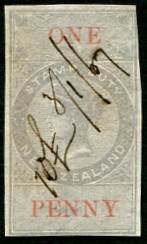
The revenue stamps were all
printed from the same plates with the value being printed
separately in a different colour at the top and bottom of the stamps.
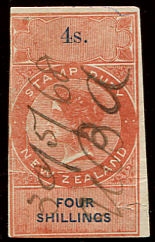
The illustrated stamp is dated 3 January 1867 and so is a very
early example.
The die and electrotypes were produced in Sydney, but the plates
were assembled and the stamps printed in Wellington at the Government
Printing Office.
The stamps were in sheets of 100 organised in two panes of 50.

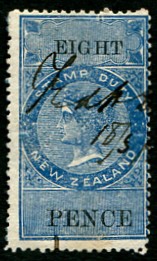
Imperforate and perf 12½
The original issue was imperforate while stamps perforated 12½
appeared in May 1867.
The various unofficial separations (roulettes, serrates
and the semi-official perf 13 at Dunedin) that exist with the
Chalons also appear on the fiscal stamps.
From 1871, stamps appeared perf 10 both on its own and in combination
with perf 12½.
A paper watermarked NZ had been produced for the
Chalon stamps
in 1864, but had not proved popular with the printer, John Davies.
The remaining stocks of that paper were used for the
initial printing of the revenue stamps.
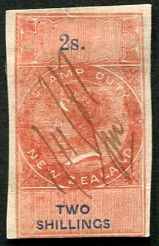
Monogram
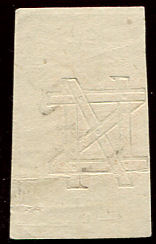
The 1s, 2s and 4s stamps were also issued in January 1867 on thick paper
impressed with a NZ monogram.
The 2s and 4s stamps were orange-red and deep blue rather than the
orange-red and green of the main issue.
From March 1867, stamps were issued watermarked large star.
In July 1867, the stamps were produced on papers with a larger NZ and the colours were changed.
Denominations
Original colours – imperforate, first issued January 1867
No less than 67 different denominations were issued ranging from
1d to £10.
Examples of the original colours on NZ watermarked paper are shown below.
Some of the denominations were seldom used and only exist imperforate.
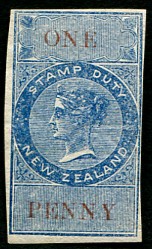
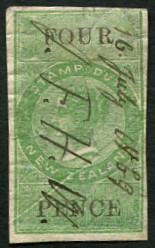
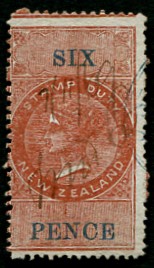
The low values were 1d, 2d, 4d, 6d, 8d and 1/-.
A range of different colours were used with the 1d and ‘One Shilling’ appears on either
one ot two lines.

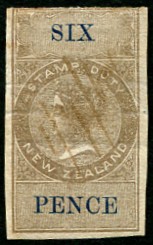
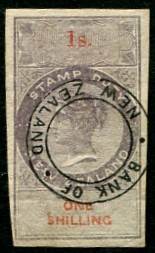
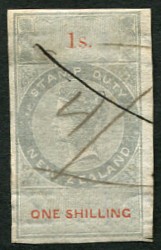
Example low denominations
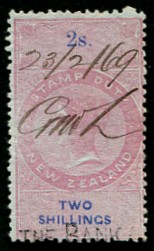
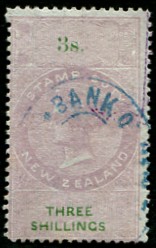
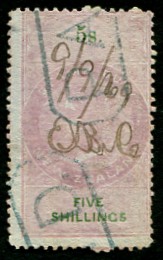
There were then the denominations 1/4, 1/6, 1/8 and 2/- and that
pattern was repeated for each of the shilling values
up to 10/-.
There were then values from 12/6 to £1.10s in steps of 2/6.
The 1s 4d, 1s 6d, 1s 8d and 2s 6d values appears with both small and large numbers in the top panel and
examples of the 1s 4d and the 2s 6d are shown.
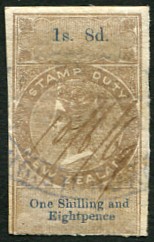
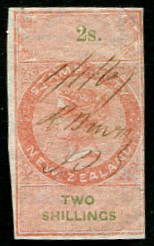

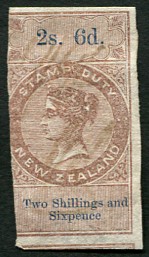
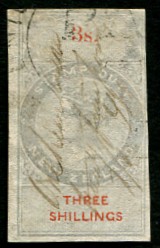
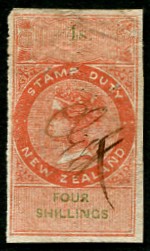

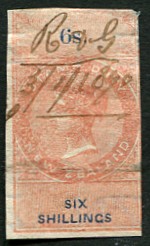
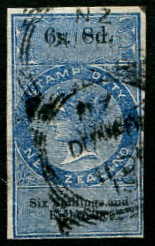
Example higher denominations
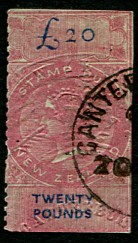
There was a £1.15s value, then in steps of 10/- from £2 to £10 and finally in steps
of £5 to £50.
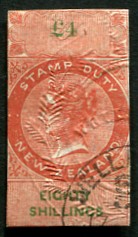
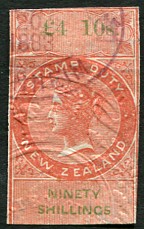
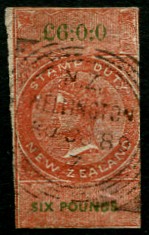
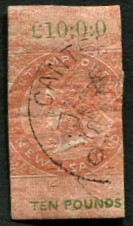
Pound denominations
Original colours – perforated, first issued May 1867
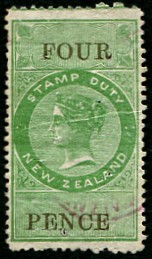
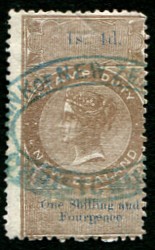

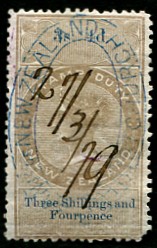
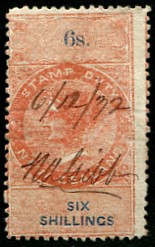
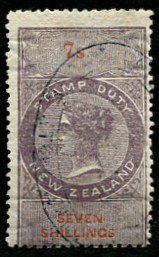
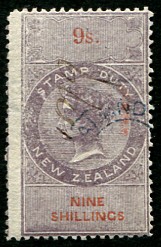
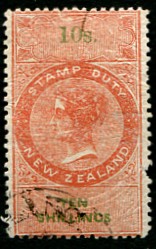
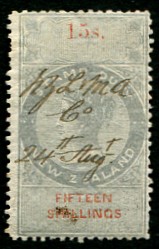

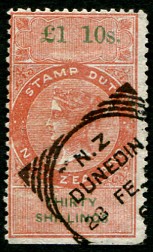

Example values
New colours – perforated, first issued July 1867
New colours for some values were introduced from July 1867.
For example, orange-red and green
was replaced by rose and blue.
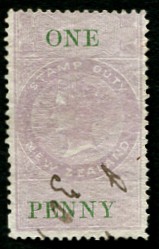



New die
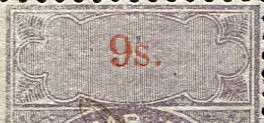

Dies I and II
A second die was produced in Melbourne in 1871 although again the
plates were assembled and all printing took place in Wellington.
The two dies differed significantly at the top.
Stamps perf nearly 12 appeared in 1874.
Stamps exist from the earlier perf 12½ and 10 machines
which were used both separately and in combination with each other
and with the new perforation head.
There are fewer different denominations than with Die I.
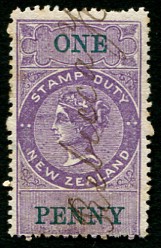
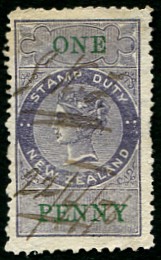
The low values are 1d, 2d, 6d, 8d and 1/-.

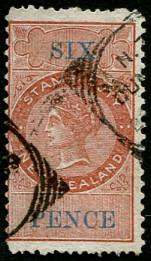
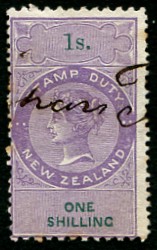
The higher values are 2/-, 2/6, 3/-, 4/-, 5/-,
6/-, 10/-, 15/-, £1, £1/10/-, £2, £2/10/-, £3, £4, £5, £10, £15,
£25, £30 and £50.
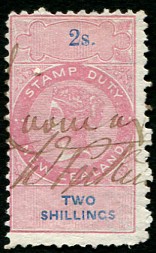
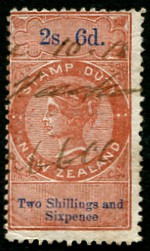
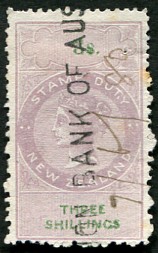
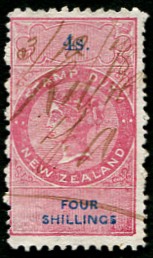
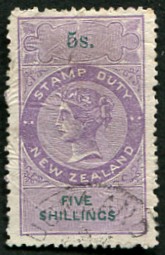
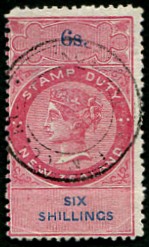
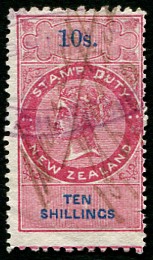
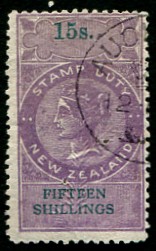
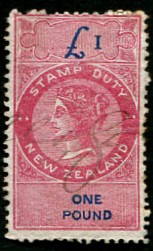
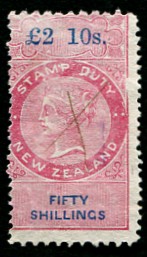
Example denominations
In addition, very high values were printed specially when required.
New issue
The issue was replaced in 1880 by a
new design of fiscal stamps which was to remain in use until 1931.

next
The above information is taken from The Postage Stamps of
New Zealand Vol 6, published by the
Royal Philatelic Society of New Zealand in 1977.
All scans were made by the author.
A large number of other examples and an online catalogue is at:
New Zealand Revenue Stamps.