
The die and plates of the 1936 Health issue
were prepared and printed by the Australian Note and Stamp Printer,
Melbourne. The plates were made of chromium-plated copper.
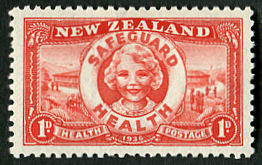
The 1936 design was by J. Berry.
Each plate consisted of 192 stamps organised in four panes of 48 (8 rows of 6) with
the plate number appearing in each corner of the plate.
Two plates were used in 1936.
After printing, the large sheet was split into four before
distribution to post offices.
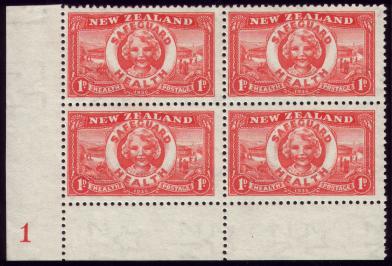
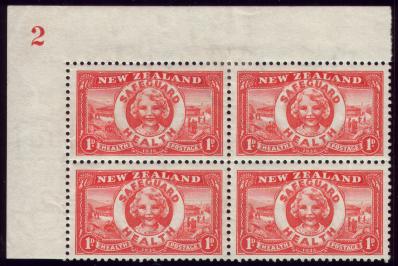
The plate numbers appear in four different positions.
The issue was on Wiggins Teape paper, watermarked NZ
and star and
the perforation was comb perf 11×11.
Health camps were run by many separate organisations, but in 1936
the National Federation of Health Camps was set up
to coordinate activities.
1936 plates 1 and 2
Dates:
- 1936 issued Nov 2, withdrawn 16 Jan 1937
Number sold:
- 1936: 1,449,980
1936 First Day Covers
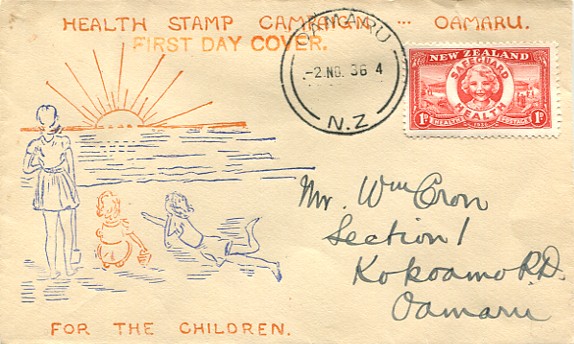
A significant number of illustrated first day covers were produced privately in 1936, but there was no official Post Office cover.
This pictorial first day cover produced by the Oamaru Health Stamp Campaign shows the 1936 Health stamp
locally addressed and postmarked in Oamaru on the first day of issue, 2 November 1936.

The second 1936 pictorial first day cover depicting the design from the earlier Smiling Boy issue shows the 1936
Health stamp postmarked in Christchurch on the first day of issue, 2 November 1936.
The cover includes the date of issue showing that this was publicised at least several days in advance.

The third 1936 pictorial first day cover was produced by the Health Camp campaign in Dunedin District.
It was postmarked in Invercargill on the first day of issue, 2 November 1936, and addressed locally.
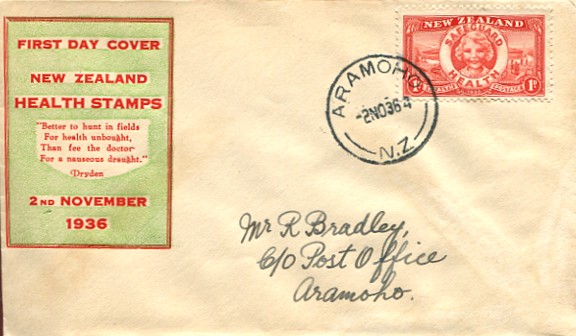
The fourth 1936 pictorial first day cover contains a quote from Dryden.
The Health stamp is postmarked in Aramoho (Wanganui) on the first day of issue, 2 November 1936.
The cover was designed and printed by Norman Hopper of Wanganui.
The cover includes the date of issue showing that this was publicised several days in advance.
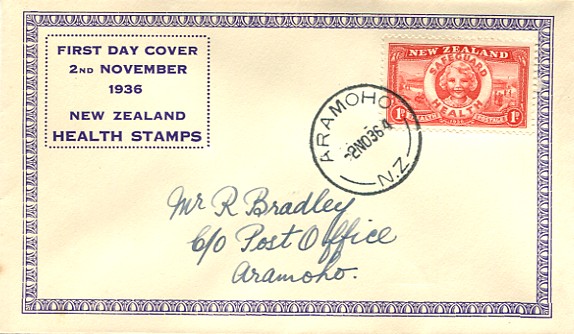
The next first day cover was also designed and printed by Norman Hopper of Wanganui
and again has the day of issue as part of the design.
The Health stamp is postmarked in Aramaho (a suburb of Wanganui) on the first day of issue, 2 November 1936
and has the same address as the previous cover.
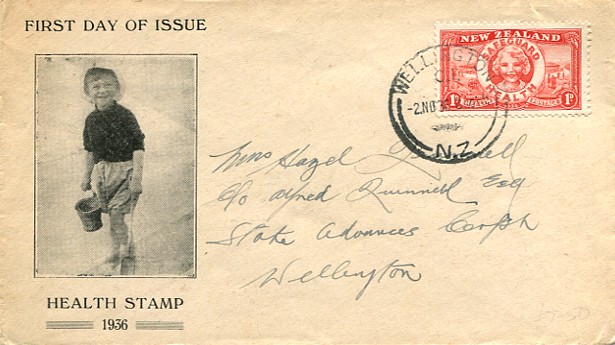
The next 1936 pictorial first day cover shows a small boy on a beach with a bucket and spade.
The Health stamp is postmarked in Wellington on the first day of issue, 2 November 1936.

This Health cover is postmarked in Moray Place in Dunedin on the first day of issue, 2 November 1936
and is addressed locally.
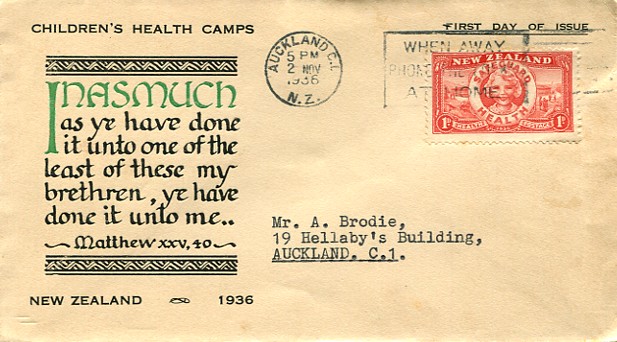
This Health cover is postmarked in Auckland on the first day of issue, 2 November 1936
and is addressed locally.

This Health cover is postmarked in Hokitika on the first day of issue, 2 November 1936
and is addressed to USA.
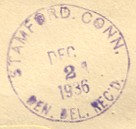
It was backstamped on arrival on 2 December.
The similarities in this and the previous two covers suggest that they were produced by the same printer.
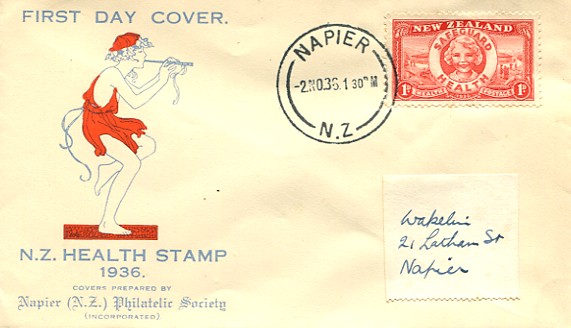
This Health cover is postmarked in Napier on the first day of issue, 2 November 1936
and is addressed locally.
It was produced by the Napier Philatelic Society, designed by a Miss Davidson and printed by Swailes Printers Ltd, Napier.
It exista in several colour combinations: Blue/Red, Green/Red, Red/Green and Brown/Green which is the combination
on the next example.

First Flight using 1936 Health Cover
Although this is a first day cover with the 1936 Health stamp, it was not postmarked in Napier until
7 December 1936.
East Coast Airways had set up a regular service
between Gisborne and Napier in April 1935.
It was suspended from April to December 1936 while Gisborne airport was improved.
The first flight left Gisborne for Napier early in the morning of 7 December and
this cover was flown on the first return flight of the resumed service from
Napier to Gisborne in the afternoon.
It is franked with 4d as it was also flown back from Gisborne to Napier on the second resumed flight
on the morning of 8 December and is postmarked in Gisborne at 6am.
The New Zealand air mail rate was 2d, 1d surface plus 1d air fee.


back next
The above information is taken from:
[1] The Postage Stamps of
New Zealand Vol 1, published by the
Royal Philatelic Society of New Zealand in 1938.
[2] Illustrated First Day Covers of New Zealand 1933-2000, Part 1: Health,
Stephen Jones, July 2008.
All scans were made by the author.