
In September and again in December 1940,
De La Rue‘s printing works were extensively
damaged during the blitz (bombing) of London in
World War II.
relevant plate blocks to be displayed.
This made it difficult for De La Rue to fulfil all their
contracts and they required help from other printers both to
print and perforate stamps.
First Printings by Waterlow
After the bomb damage in September 1940, De La Rue handed the
following plates over to Waterlow & Sons:
- 4d frame plate 2B and
centre plate 3, - 5d plate 1,
- 6d plate 2,
- 8d plate 3,
- 1/- plate A1,
- 2/- plate 1,
- 3/- frame plate 1 and
unnumbered centre plate.
The plates were returned to De La Rue in September 1941.
Sheets of these values were printed by Waterlow in late 1940 and
returned to De La Rue for perforation.
However, in the fire after the December bombing,
all copies of the 5d, 2/- and 3/- values and
most of the 4d and 8d values were destroyed.
Line perforated 14 by De La Rue
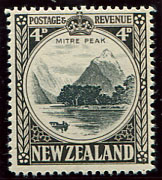
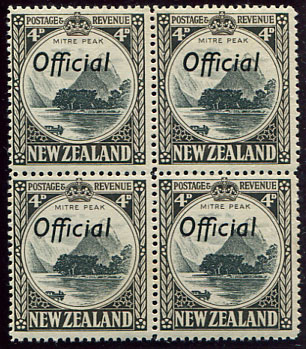
De La Rue managed to perforate the surviving 2,000 sheets
of the 4d in February 1941.
They were line perforated 14
and are rare as most of the the issue
was overprinted Official.
The line characteristics can be clearly seen in the block
of four.
The stamp overprinted Official
was issued in August 1941 while the ordinary
stamp perf 14 was not issued until November.
Collectors must beware overly optimistic sellers who mistakenly
offer the 1935 comb perf 14 or the 1942 comb perf 14 x 14½
as the line perf 14.
(The perforations in the perf 14 x 14½ vary and are often
14 x 14.)
Apart from the absence of line characteristics, the 1935
issue can be differentiated by its mesh while the 1942
issue is on coarse paper.
Returned to Waterlow and line perforated 12½
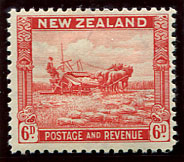
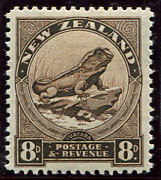

The full printing of both the 6d (42,000 sheets) and the 1/- (6,300
sheets) survived the December 1940 fire.
Together with
the surviving 7,500 sheets of the 8d, they were returned
to Waterlow where they were line perforated 12½
in April 1941.
The 6d stamps were issued in October, the 8d in July and the
1/- in November 1941.
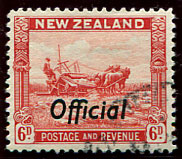
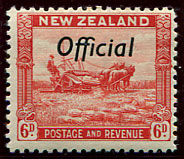
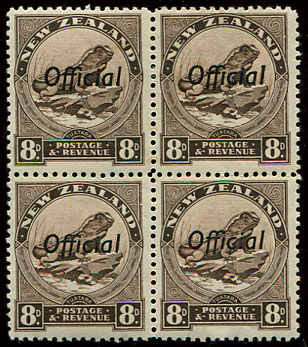
All three values were issued overprinted Official.
The 6d is unusual in that the stamps issued in December 1941
had the overprint at the bottom while those issued in February
1942 had the overprint at the top.
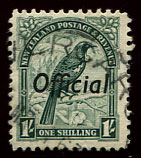
The 8d Official was issued in August 1942.
The irregular corners, characteristic of a line
perforation, are clearly seen in the block of four.
The 1/- Official, which is much more common than the
un-overprinted stamp, was issued in April 1942.
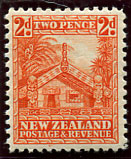
The 2d value
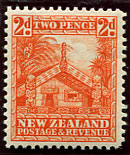
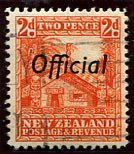
Although De La Rue continued to print the 2d value,
they required help in perforating the sheets.
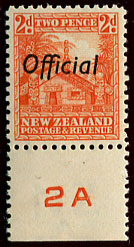
All sheets were from plates 2A and 2B.
De La Rue did manage to perforate 25,000 sheets of the 2d in
February 1941.
They were line perforated 14.
Some were overprinted Official and issued in March 1942.
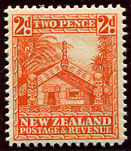
Perforated 14 x 15 by Harrison
10,000 sheets of the 2d were sent to Harrison where
they were line perforated 14 x 15 in February 1941.
These stamps were not overprinted Official.
Perforated 12½ by Waterlow
50,000 sheets of the 2d were sent to
Waterlow to be line perforated 12½ in February 1941.
A further 50,000 sheets were peforated 12½ by
Waterlow in July.
In March 1942, a small number of sheets perf 12½
were issued overprinted Official.
They were all from plate 2A.
2d stamps from all the different line perforations
were first issued in New Zealand in June 1941.
Further printings by Waterlow
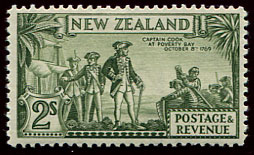
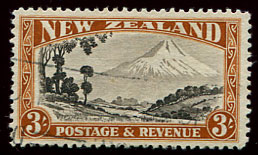
Replacements for the sheets destroyed in the fire
were ordered in February and (for the 8d) April 1941.
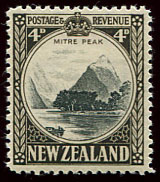
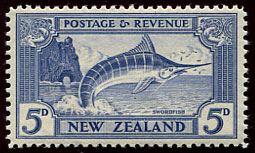
51,000 sheets of the 4d, 21,000 sheets of the 5d,
38,700 sheets of the 8d,
10,500 sheets of the 2/- and 4,320 sheets of the 3/-
were printed by Waterlow and line perforated 12½.
These stamps were issued in July and August 1941 before
those salvaged from the fire in December.
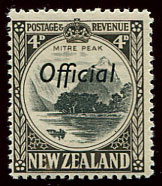
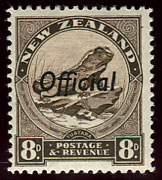
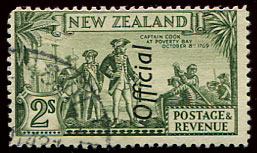
The 4d, 8d and 2/- values perf 12½ were issued overprinted
Official in December 1941, August 1942 and April 1942
respectively.
Printed by De La Rue, perforated by Waterlow
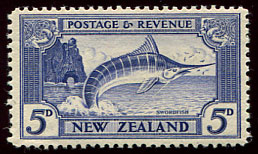
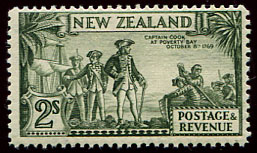
The plates were returned to De La Rue in September 1941.
However 20,000 sheets of each of the 5d and 2/- values
printed by De La Rue
were sent to Waterlow in December 1941 where they were perforated
12½.
They are on coarse paper and so can be distinguished from the earlier
Waterlow prints.
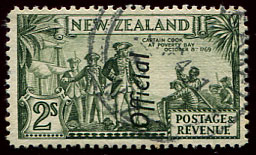
Although some of the 5d sheets were from plate 1, as in the
Waterlow printing, most of this printing was from plate 2.
The 2/- value perf 12½ and on coarse paper
was issued overprinted Official in late 1942.
Shift markings
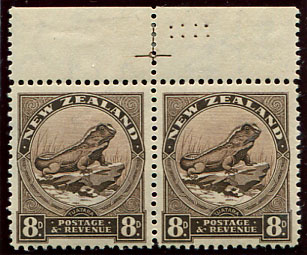
While the plates were at Waterlow, rows of dots were
added to the selvedge of the 4d, 5d, 6d and 8d values
apparently to indicate the shift
in which the printing took place.
As the significance of these dots was not widely realised
by collectors at the time, surviving blocks are scarce.
Aspects of Collecting New Zealand Stamps
has illustrations of the different distributions of
shift markings that appear in the top selvedge of the 8d plate.
The illustration shows 8 dots, but blocks
with 1, 7, 8, 12, 13, 14 and 15 dots are known.
The 8d perf 12½ overprinted Official is known with 8, 13 and 14 dots.
The first printings of the 8d by Waterlow were in late 1940
and a subsequent printing was ordered in 1941.
It would be interesting to be able to allocate shift markings to
these different printings.
The 4d perf 14 exists with:
- no dots,
- 6 dots in the colour of the centre plate
and 2 in the colour of the frame, - 10 dots in the colour of the centre plate and 6 in the
colour of the frame.
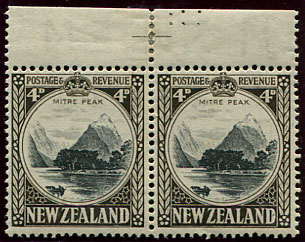
In the printings perf 12½, no more frame dots were added,
but sheets had either 14 or 20 dots in the colour of the centre.
The dots in the 5d and 6d appear in the middle of
the right hand selvedge.
The 5d has 7 dots while the 6d has 2.
The shift markings were not removed when the
plates were returned to De La Rue and so remain on
subsequent printings from plates 2B and 3 of the 4d,
plate 1 of the 5d, plate 2 of the 6d and plate 3 of the 8d.
The illustrated pair of the 4d has 6 dots in two rows of 3
in the upper selvedge printed in the colour of the frame.
The stamps are perf 14 x 14½ and so were printed
by De La Rue after frame plate 2B was handed back
by Waterlow.


back next
The above information is taken from The Postage Stamps of
New Zealand Vol 2 published by the
Royal Philatelic Society of New Zealand in 1950.
All scans were made by the author.